How Long Does a Root Canal Take?
Root canal treatment usually takes 60–90 minutes per appointment. Learn why some teeth need two visits and when to schedule a crown afterward.
Have a question about your own teeth?Free
Ask usQuick answer: most root canal appointments take about 60–90 minutes, although a complicated tooth may take longer or need a second visit (Cleveland Clinic). That estimate covers the root canal appointment; a permanent filling or crown may require additional time with your regular dentist. Ask the office how much time to reserve for your particular tooth.
What affects treatment time?#
Which tooth needs treatment#
Molars are generally more difficult to treat than front teeth, according to the American Association of Endodontists. Their canal systems can contain extra branches or canals that need careful attention. The aim is to find, clean, and seal the spaces inside the tooth, so a difficult canal system can make the appointment longer. Our reviewed answer on finding an additional canal in an upper molar explains why that search matters.
Narrow, curved, or hidden canals#
Canal anatomy varies between teeth. A three-dimensional scan called cone-beam CT can help a dentist assess complex anatomy when ordinary X-rays do not provide enough information. It is used selectively because it adds radiation exposure and cost; it does not guarantee a shorter appointment (Wong et al., 2025).
An endodontist is a dentist with additional specialist training in treating the inside of teeth. Your general dentist may refer you for a complex case; the referral itself does not tell you how long treatment will take (American Association of Endodontists).
Why might treatment take two visits?#
Some root canals are completed in one appointment. Others are divided into visits so cleaning and treatment can continue before the canals are permanently filled. Medication may be placed inside the tooth, with a temporary filling protecting the opening between appointments (American Dental Association). Ask what will happen at each visit and how soon you should return.
A second visit does not automatically mean a better result. A Cochrane review found no evidence of a difference between single-visit and multiple-visit treatment in failure assessed on X-rays, with moderate-certainty evidence for that outcome. The findings do not establish that either schedule suits every tooth; your dentist still needs to choose an approach for your situation (Mergoni et al., 2022).
What happens during the appointment?#
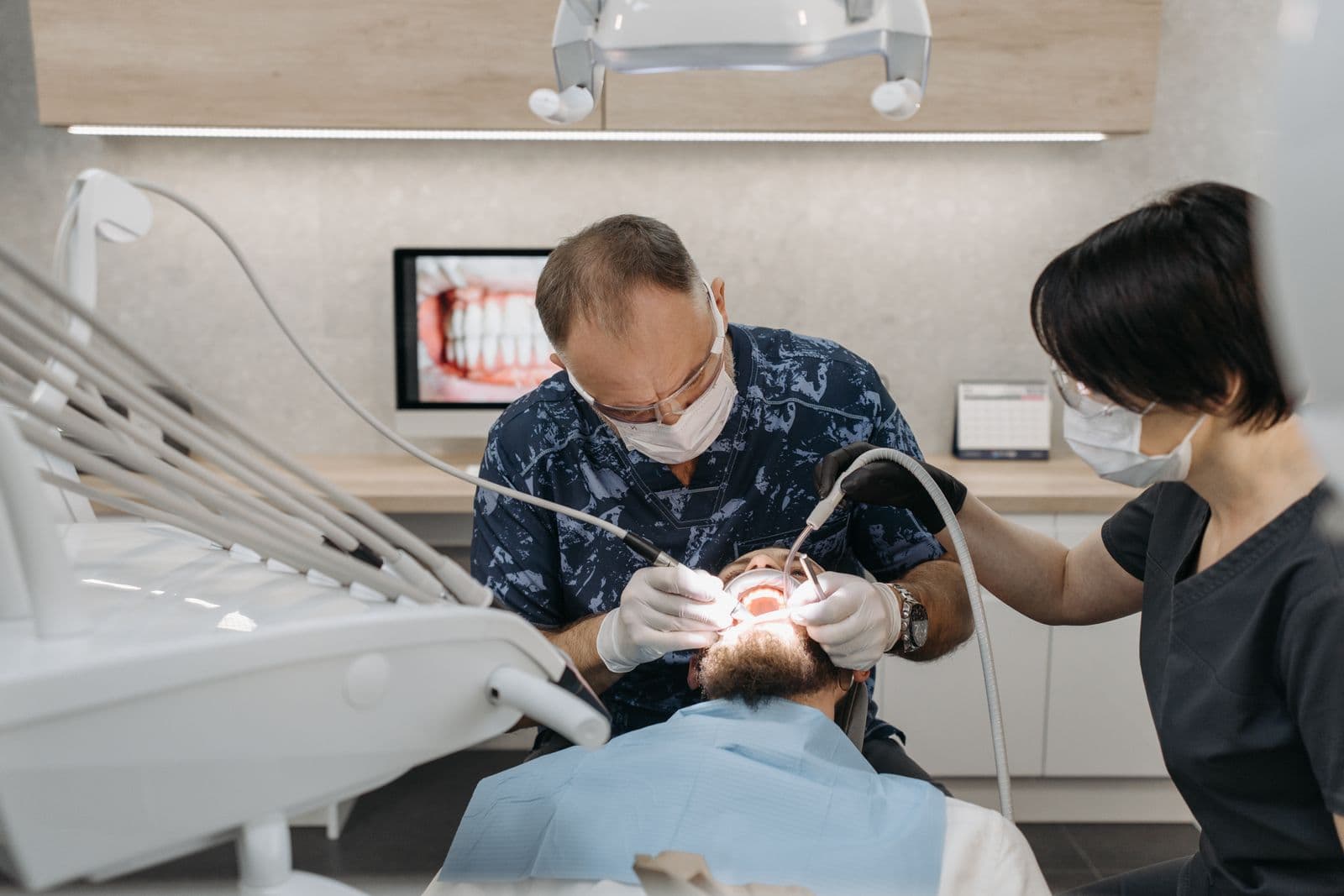
Treatment includes several steps, and the time spent on each varies. The dentist first examines the tooth and takes X-rays, numbs the area, and isolates the tooth with a protective dental dam. An opening allows small instruments to remove the damaged pulp and clean and shape the canals. The canals are then filled and sealed, and the opening is closed, often with a temporary filling (American Dental Association).
Allow room in your schedule for those steps instead of expecting a fixed number of minutes for each. If you are worried about discomfort, our post on whether a root canal is painful explains what to expect.
Is the crown included in that time?#
Usually, the permanent restoration is a separate stage. Back teeth often need crowns to protect them from fracture, while some front teeth can be restored without one. Your dentist decides based on the tooth's location and remaining structure. Arrange the restoration promptly and avoid chewing on the tooth until it is restored (American Association of Endodontists).
Sealing the tooth is also important between stages. A systematic review found that an additional barrier over the canal filling reduced leakage in laboratory studies. Those results do not prove that the barrier improves long-term tooth survival in patients, and it does not replace the final restoration (Chen et al., 2023).
Frequently asked follow-ups#
Can I go back to work afterward?#
Many people can return to work after treatment with local anesthesia. Your mouth may remain numb for several hours; if sedation is planned, ask for specific instructions about transport and activities (American Association of Endodontists).
Is a longer appointment a sign something went wrong?#
The clock alone cannot tell you that. Ask whether additional time is needed for anatomy, cleaning, or another part of your treatment plan.
Key takeaways#
- Most appointments take about 60–90 minutes, but some need longer.
- One or two visits may be needed, depending on your tooth and treatment plan.
- Difficult anatomy can add time; ask your dentist for an individual estimate.
- Arrange the permanent filling or crown promptly after the root canal.
This article is for general educational purposes and does not replace a personalized evaluation from a dental professional.
Ask a dental question
Still have a question?
Free. Answers from published research, then book a visit with a verified local dentist.
Ask a questionCitations
- Cleveland Clinic. Root canal: Procedure & recovery.
- American Association of Endodontists. Root canal explained.
- American Association of Endodontists. What is a root canal?
- American Dental Association. Root canals. MouthHealthy.
- Mergoni, G., Ganim, M., Lodi, G., Figini, L., Gagliani, M., & Manfredi, M. (2022). Single versus multiple visits for endodontic treatment of permanent teeth. Cochrane Database of Systematic Reviews, 12, CD005296.
- Wong, J., Zhang, C., & Lee, A. H. C. (2025). Clinical benefits and limitations of cone-beam computed tomography in endodontic practice: A contemporary evidence-based review. Diagnostics, 15(24), 3117.
- Chen, P., Chen, Z., Teoh, Y. Y., Peters, O. A., & Peters, C. I. (2023). Orifice barriers to prevent coronal microleakage after root canal treatment: Systematic review and meta-analysis. Australian Dental Journal, 68(2), 78–91.
About the author
Chithra Durgam, DDS
Guest contributor
Dr. Chithra Durgam is a licensed dentist and guest contributor to Dental Evidence.
More from the blog
- Can Menopause Cause Bone Loss in the Jaw?Menopause can cause jawbone loss: falling estrogen lowers jaw bone density, raising risks of loose teeth, gum disease, and implant complications.
- Why Does My Tooth Hurt When I Chew?Pain when chewing: cracked tooth, deep cavity, failing filling or crown, abscess, gum disease, or sinus pressure — and when to see a dentist.
- How Long Is Recovery After LANAP?LANAP recovery: most patients return to normal activities in 1–3 days, while complete gum healing and reattachment take one to three months.