What Should I Do If I Knock Out a Tooth?
A knocked-out tooth: handle it by the crown, rinse, replant or store in milk, and see a dentist within 30–60 minutes to save it.
A knocked-out (avulsed) permanent tooth is one of the few dental injuries where what happens in the first minutes decides the outcome: pick the tooth up by the crown, rinse it gently if it is dirty, replant it in the socket if you can, keep it moist in milk or saliva if you cannot, and get to a dentist within 30 to 60 minutes (Sigurdsson et al., 2026; Fouad et al., 2020). Avulsion is a true dental emergency, so act first and read the rest of this afterward.
Step-by-step: what to do immediately#
1. Find the tooth and handle it by the crown#
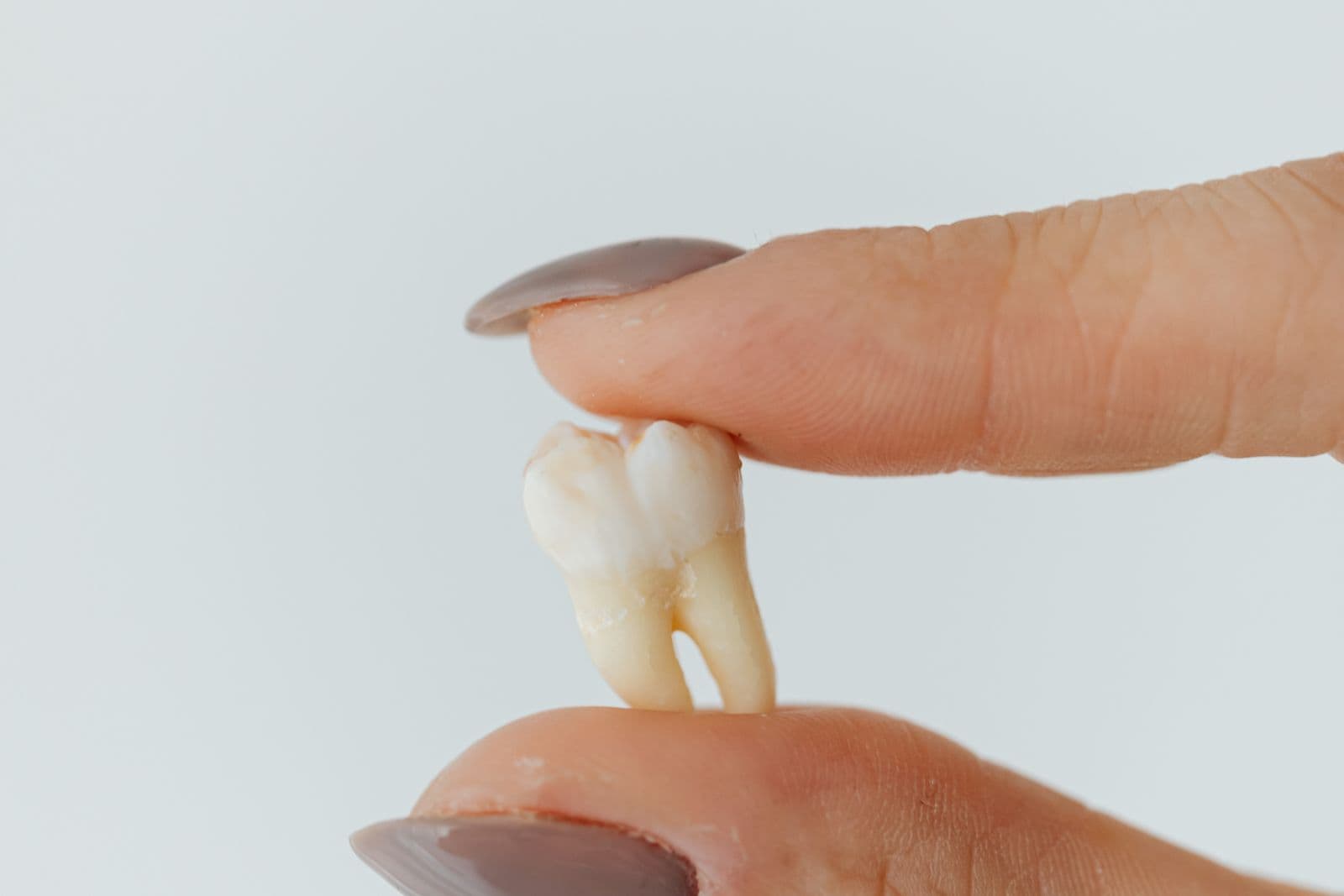
Pick the tooth up by the crown — the chewing surface — and never touch, hold, or scrub the root. The root surface is covered by a thin layer of periodontal ligament cells that the tooth needs to reattach in the socket, and handling or drying them destroys the chance of saving the tooth (Fouad et al., 2020).
2. Rinse gently if it is dirty#
If the tooth has dirt or debris on it, rinse it briefly with milk, or with water if milk is not at hand. Do not use soap or disinfectant, do not scrub it, and do not dry it with a towel or cloth.
3. Try to replant the tooth#
If the person is calm enough, gently place the tooth back into its socket, crown facing out, checking it sits the right way round, and have them bite gently on gauze or a clean cloth to hold it in place. A tooth replanted at the site of the injury — even by a parent or bystander — has the best possible starting point for healing (Sigurdsson et al., 2026; Fouad et al., 2020).
4. If you cannot replant it, keep it moist#
Store the tooth in a container of milk, or have an older child or adult hold it in the cheek pouch, where saliva keeps the root cells alive. Avoid storing the tooth in plain tap water: its low osmolality swells and kills the root-surface cells that replantation depends on (Fouad et al., 2020). Saline or a pharmacy tooth-preservation kit works if one is at hand.
5. Get to a dentist immediately#
Time is critical. The best outcomes occur when the tooth is replanted within 30 to 60 minutes of the injury, and every extra minute of dry time lowers the odds (Sigurdsson et al., 2026). Call ahead so the office knows a trauma is arriving, and go even if the tooth was replanted at the scene — it still needs professional splinting and follow-up. If no dentist can see you quickly, go to an urgent care or emergency room that can stabilize the tooth.
What not to do#
- Do not touch or scrub the root
- Do not let the tooth dry out
- Do not store it in plain tap water for more than a brief rinse
- Do not try to force it back in if it does not seat easily — see a dentist right away instead
What happens at the dental office#
The dentist cleans the area, replants the tooth if that was not done at the scene, and splints it to the neighboring teeth to hold it stable while the ligament heals. A root canal is usually started within about a week for a tooth with a closed apex, because the pulp rarely survives avulsion; an immature tooth with an open apex may instead be treated with regenerative endodontics so the root can keep developing (Sigurdsson et al., 2026). Follow-up visits over months and years watch for root resorption, the main late complication, which is why replanting even a hopeless-looking tooth still beats leaving the socket empty.
Frequently asked follow-ups#
Does this apply to baby teeth too?#
No — baby teeth are generally not replanted, because the root of a replanted primary tooth sits against the developing permanent tooth underneath and can damage it (Malmgren et al., 2012). Still see a dentist promptly to check the area.
What if I cannot reach a dentist right away?#
Go to an emergency room or urgent care if no dentist is available quickly — some can replant or stabilize the tooth temporarily until a dentist can take over.
Can a knocked-out tooth always be saved?#
Not always, but acting quickly and correctly improves the odds substantially. Even a tooth replanted after the ideal window can sometimes survive with prompt professional care and follow-up (Sigurdsson et al., 2026).
Key takeaways#
- Act immediately — replanting within the critical 30 to 60 minute window maximizes the chance of saving the tooth.
- Handle the tooth only by the crown, avoiding any contact with or scrubbing of the root.
- Keep the tooth moist in milk or saliva, and avoid plain tap water or dry storage.
- Do not replant knocked-out baby teeth, to protect the developing permanent teeth underneath.
This article is for general educational purposes and does not replace a personalized evaluation from a dental professional. This is a time-sensitive dental emergency — seek immediate care.
Citations
- Sigurdsson, A., Blicher, B., Miller, A. J., Singh, V., Teixeira, F. B., Williamson, A. E., & Bourguignon, C. (2026). Recommended Guidelines of the American Association of Endodontists for the Treatment of Traumatic Dental Injuries. Journal of Endodontics, 52(8), 1237–1253.
- Fouad, A. F., Abbott, P. V., Tsilingaridis, G., et al. (2020). International Association of Dental Traumatology guidelines for the management of traumatic dental injuries: 2. Avulsion of permanent teeth. Dental Traumatology, 36(4), 331–342.
- Malmgren, B., Andreasen, J. O., Flores, M. T., et al. (2012). Guidelines for the management of traumatic dental injuries: 3. Injuries in the primary dentition. Dental Traumatology, 28(3), 174–182.
About the author
Chithra Durgam, DDS
Guest contributor
Dr. Chithra Durgam is a licensed dentist and guest contributor to Dental Evidence.
More from the blog
- Am I a Candidate for Invisalign?Invisalign candidacy: aligners suit mild to moderate crowding, spacing, and bite issues, need 20 to 22 hours of daily wear, and healthy gums and bone support.
- Can Adults Get Braces?Adults can get braces at any age: gum and bone health matter more than age, treatment time runs similar to teens, and lifelong retention protects the result.
- What Counts as a Dental Emergency?Severe pain, uncontrolled bleeding, swelling, a knocked-out tooth, or spreading infection are dental emergencies; lost fillings and mild sensitivity can wait.