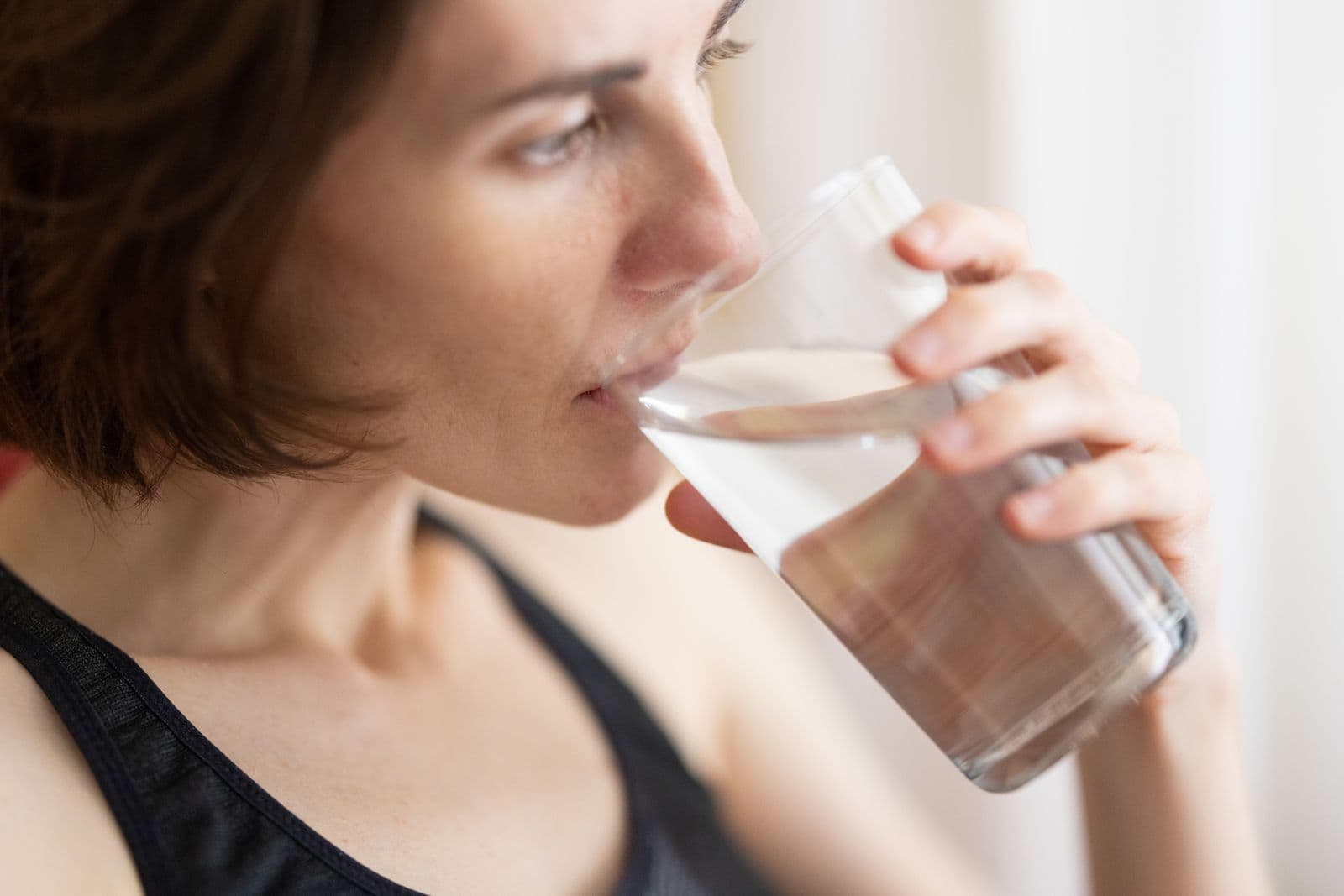
Can Hormone Changes Cause Dry Mouth?
Hormone changes can cause dry mouth: estrogen receptors in the salivary glands mean declining estrogen reduces saliva and raises cavity and gum risks.
Yes. Declining estrogen during perimenopause and menopause is a documented cause of dry mouth, because your salivary glands are estrogen-sensitive tissue. Reduced saliva brings discomfort, bad breath, and a higher risk of cavities and gum irritation. In a Delta Dental survey of more than 1,000 women aged 50 and over, 79% said they had noticed changes in their teeth and gums (Delta Dental, 2023).
Why hormones affect saliva#
Salivary glands carry estrogen receptors. Välimaa et al. (2004) found estrogen receptor beta widely expressed in salivary gland acinar and ductal cells and in the oral epithelium, which points to a direct role for estrogen in regulating saliva secretion and composition.
Flow measurements back the receptors up. In a study comparing 30 menopausal women with 30 younger controls, stimulated salivary flow was significantly lower in the menopausal group (Minicucci et al., 2013). Many women first notice the dryness at night, when saliva output drops to its circadian low anyway.
Signs of hormone-related dry mouth#
- A sticky or dry feeling in the mouth, especially on waking
- Difficulty swallowing or speaking for extended periods
- A burning sensation on the tongue
- Bad breath that brushing does not improve
- More cavities or mouth sores than before
Why dry mouth matters for dental health#
Saliva neutralizes acids, washes away food particles, and keeps bacteria from settling in. A 2025 scoping review of 30 studies found xerostomia and altered taste are the most common oral manifestations of menopause, with postmenopausal women showing notable reductions in salivary flow and pH, and an elevated risk of periodontitis, tooth loss, and candidiasis (Labuneț et al., 2025). A dry mouth protects the teeth less, so the teeth need more of your help.
Managing hormone-related dry mouth#
- Drink water throughout the day, not just with meals
- Chew sugar-free gum or suck sugar-free lozenges to stimulate saliva flow
- Try an over-the-counter dry mouth spray or rinse designed for this purpose
- Run a humidifier at night if dryness is worse while sleeping
- Ask your dentist about prescription saliva-stimulating medications for severe cases
- Skip alcohol-based mouthwashes, caffeine, and tobacco, all of which worsen dryness
Frequently asked follow-ups#
Is dry mouth from menopause temporary?#
It can persist through and after the menopausal transition for some women. Severity varies, and consistent care keeps it manageable either way.
Can dry mouth cause bad breath?#
Yes. Saliva clears away the bacteria that produce odor, so reduced flow commonly leads to bad breath that brushing alone does not fix.
Should I see a dentist or a doctor about hormone-related dry mouth?#
Both can help. Your dentist treats the oral symptoms and sets up protective measures, while your physician can discuss whether hormone-related treatment makes sense for you overall.
Key takeaways#
- Salivary glands carry estrogen receptors, so declining estrogen during perimenopause and menopause can directly reduce saliva production.
- Reduced saliva raises the risk of cavities, bad breath, and oral infections because the mouth loses its acid-neutralizing, bacteria-clearing protection.
- Hydration, sugar-free gum, dry mouth sprays or rinses, and a bedside humidifier are effective management steps.
- Your dentist handles the oral symptoms while your physician addresses the hormonal side, so both visits are worth making.
This article is for general educational purposes and does not replace a personalized evaluation from a dental or medical professional.
Citations
- Välimaa, H., Savolainen, S., Soukka, T., Silvoniemi, P., Mäkelä, S., Kujari, H., Gustafsson, J.-Å., & Laine, M. (2004). Estrogen receptor-beta is the predominant estrogen receptor subtype in human oral epithelium and salivary glands. The Journal of Endocrinology, 180(1), 55–62.
- Minicucci, E. M., Pires, R. B., Vieira, R. A., Miot, H. A., & Sposto, M. R. (2013). Assessing the impact of menopause on salivary flow and xerostomia. Australian Dental Journal, 58(2), 230–234.
- Labuneț, A., Objelean, A., Kui, A., Rusu, L., Vigu, A., & Sava, S. (2025). Oral manifestations in menopause — a scoping review. Medicina, 61(5), 837.
- Delta Dental Insurance Company. (2023). Senior Oral Health and Menopause Report: Breaking the stigma.
About the author
Chithra Durgam, DDS
Guest contributor
Dr. Chithra Durgam is a licensed dentist and guest contributor to Dental Evidence.
More from the blog
- Am I a Candidate for Invisalign?Invisalign candidacy: aligners suit mild to moderate crowding, spacing, and bite issues, need 20 to 22 hours of daily wear, and healthy gums and bone support.
- Can Adults Get Braces?Adults can get braces at any age: gum and bone health matter more than age, treatment time runs similar to teens, and lifelong retention protects the result.
- What Counts as a Dental Emergency?Severe pain, uncontrolled bleeding, swelling, a knocked-out tooth, or spreading infection are dental emergencies; lost fillings and mild sensitivity can wait.