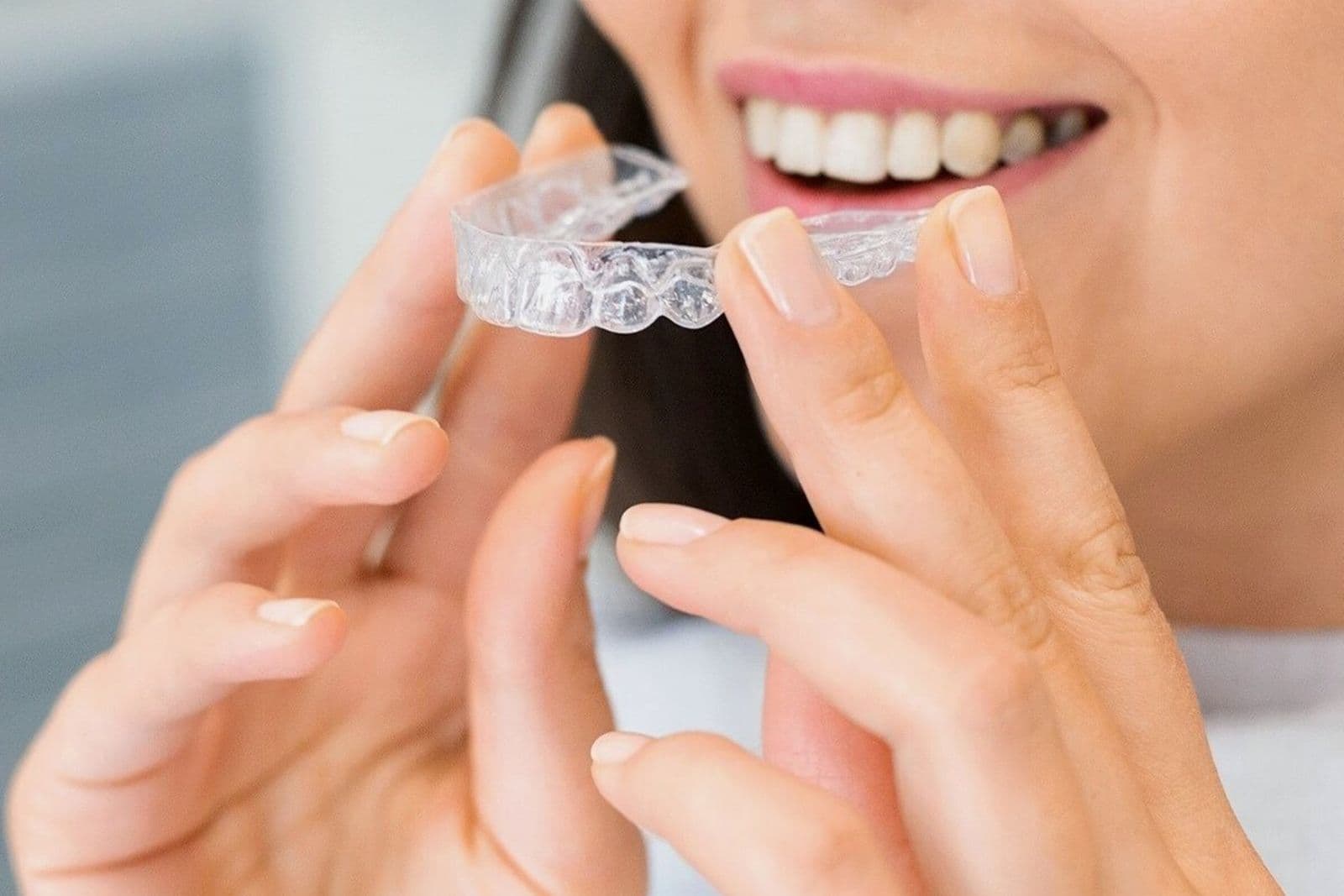
Am I a Candidate for Invisalign?
Invisalign candidacy: aligners suit mild to moderate crowding, spacing, and bite issues, need 20 to 22 hours of daily wear, and healthy gums and bone support.
Most teens and adults with mild to moderate crowding, spacing, or bite issues can straighten their teeth with Invisalign. Severe crowding, major bite discrepancies, or extensive dental work may respond better to fixed braces, and a scan and consultation will show where your case falls.
What makes a good candidate#
- Mild to moderate crowding or gaps between the teeth
- A mild to moderate overbite, underbite, or crossbite
- Healthy gums and adequate bone support around the teeth
- The discipline to wear the trays 20 to 22 hours every day
The research supports aligners for this range. A systematic review with meta-analyses of aligner and fixed appliance treatment concluded aligners achieve comparable outcomes in mild to moderate malocclusions, with inferior outcomes in severe cases and in specific tooth movements (Papageorgiou et al., 2020). A separate meta-analysis reached a similar verdict: both appliances straighten teeth, and aligners performed well on alignment, with weaker control of occlusal contacts and torque (Ke et al., 2019).
Wear time is where many candidates stumble. A randomized trial that embedded microsensors in aligners found adults actually wore them 15.2 hours a day on average, against a recommended 20 to 22 hours, and wear time declined over successive aligners. Patients who knew the sensor was recording wore their aligners about 4.4 hours longer per day (Sabbagh et al., 2026). If you cannot commit to near-constant daily wear, results will lag no matter how suitable your case looks on the scan.
Cases that need a closer look#
Severe crowding or spacing#
Large movements sometimes respond better to traditional braces. Systematic reviews consistently associate aligner therapy with inferior outcomes in severe malocclusions, especially extraction cases where fixed appliances achieve better control of root position and occlusal contacts (Papageorgiou et al., 2020). Newer aligner systems keep expanding what is treatable, so the boundary moves over time.
Significant bite discrepancies#
Major overbites, underbites, and open bites may need fixed braces, additional appliances, or in some cases jaw surgery alongside orthodontics.
Missing teeth or extensive dental work#
Bridges, multiple crowns, and missing teeth can interfere with aligner fit and retention. Your provider factors the existing work into the plan and coordinates with your restorative dentist where a crown or filling needs replacing first.
Active gum disease#
Treat and stabilize gum disease before starting any orthodontic tooth movement, aligners included. Once treatment is underway, the removability helps: a systematic review found periodontal health indexes improved during clear aligner therapy, with no adverse periodontal effects reported in the included studies (Rossini et al., 2015).
How a provider decides#
A consultation with digital scans or X-rays lets your provider map your case and show a simulation of expected results before you commit. The scan, the exam findings, and your own wear-time habits decide candidacy together.
Frequently asked follow-ups#
Can teenagers use Invisalign?#
Yes. Invisalign has teen products with compliance indicators and features for growing mouths, though wear-time discipline matters even more for younger patients.
What if I am not a candidate for Invisalign?#
Your provider can recommend traditional or ceramic braces, or a combination approach, to reach the same result.
Is a free consultation enough to know for sure?#
In most cases yes. An initial scan and exam is generally sufficient for your provider to confirm candidacy and outline a treatment plan.
Key takeaways#
- Mild to moderate crowding, spacing, and bite issues are the best fit for Invisalign; severe cases and complex movements favor fixed braces.
- Plan on 20 to 22 hours of daily wear, and know that objectively measured wear often falls short of the recommendation.
- Gum disease should be treated and stabilized before any orthodontic tooth movement.
- A digital scan and consultation is the most reliable way to confirm candidacy before committing.
This article is for general educational purposes and does not replace a personalized evaluation from a dental or orthodontic professional.
Citations
- Papageorgiou, S. N., Koletsi, D., Iliadi, A., Peltomaki, T., & Eliades, T. (2020). Treatment outcome with orthodontic aligners and fixed appliances: a systematic review with meta-analyses. European Journal of Orthodontics, 42(3), 331–343.
- Ke, Y., Zhu, Y., & Zhu, M. (2019). A comparison of treatment effectiveness between clear aligner and fixed appliance therapies. BMC Oral Health, 19(1), 24.
- Rossini, G., Parrini, S., Castroflorio, T., Deregibus, A., & Debernardi, C. L. (2015). Periodontal health during clear aligners treatment: a systematic review. European Journal of Orthodontics, 37(5), 539–543.
- Sabbagh, H., Baumert, U., Liedtke, J., Thiem, S., Venkova, V., & Wichelhaus, A. (2026). Objective assessment of wear time during orthodontic aligner therapy using microsensors: A randomized controlled trial. American Journal of Orthodontics and Dentofacial Orthopedics, 169(3), 272–284.
About the author
Chithra Durgam, DDS
Guest contributor
Dr. Chithra Durgam is a licensed dentist and guest contributor to Dental Evidence.
More from the blog
- Can Adults Get Braces?Adults can get braces at any age: gum and bone health matter more than age, treatment time runs similar to teens, and lifelong retention protects the result.
- What Counts as a Dental Emergency?Severe pain, uncontrolled bleeding, swelling, a knocked-out tooth, or spreading infection are dental emergencies; lost fillings and mild sensitivity can wait.
- Prolia and Dental Work: Extractions, Implants, Periodontal Surgery, and Routine CareProlia (denosumab) and dental work: MRONJ risk at osteoporosis doses, no drug holiday, extraction timing, implants, periodontal and endodontic care.